In these fiscally challenging times, the idea of any money will surely attract our attention. We are indeed fortunate that despite the state budget challenges, Child Welfare Services Outcome Improvement Project grants are still being made. County Fiscal Letter 10/11-06 was released just prior to Thanksgiving with county allocations. With the exception of Alameda and Los Angeles, IV-E waiver counties, every county probation department is eligible to receive a minimum of $10,000 to use toward specific outcome improvement activities.
A reminder that counties must adhere to federal Title IV-E rules when claiming the funds and that your current Memorandum of Understanding with child welfare services supports these expenditures.
In the past, probation departments have used the funding to increase reunification by supporting family visitation to youth in placement, purchasing laptops for officers to take with them on placement visits to allow them to keep up with required documentation. Current focus include family finding to meet notification requirements and meet permanency needs of youth; support for adoption including individualized recruitment. This may be the one opportunity that we have this year to meet needs that would otherwise go unfunded. Use it or lose it!
Wednesday, December 15, 2010

Tuesday, September 7, 2010
Probation Instructor Is "OUTSTANDING"
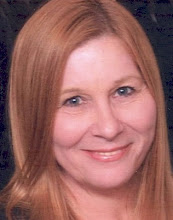
This evening, UC Davis Extension will honor all of its instructors at the biennial Instructor Appreciation Reception and particularly honor several instructors as "Outstanding Service Award" recipients. It is fitting that Carol Ritchie is the first of our probation instructors to receive this distinctive honor.
Carol has given her life to the safety of communities and the betterment of the lives of youth. She has spent over three decades as a deputy probation officer, supervising probation officer and finished her career as a director; all in the largest probation department in the country. Carol was an early member of our Probation Advisory Committee and joined us as an instructor after her retirement in 2003. As an instructor, Carol has credibility but most importantly, she shares a passion for the well-being of youth involved with juvenile justice. Carol has been a leader in the probation field around group home monitoring, placement policies, and permanency for juvenile justice youth.
It is an honor for US to have Carol Ritchie as an instructor. We know that she is appreciated by participants as "one of our own."
If you are passionate about probation and youth, we invite you to consider becoming a part time instructor. Our vision is that "all children are loved and nurtured by safe, supportive families and communities." We are committed to child and family well-being and value family, dignity, integrity, hope, and excellence.
Carol has given her life to the safety of communities and the betterment of the lives of youth. She has spent over three decades as a deputy probation officer, supervising probation officer and finished her career as a director; all in the largest probation department in the country. Carol was an early member of our Probation Advisory Committee and joined us as an instructor after her retirement in 2003. As an instructor, Carol has credibility but most importantly, she shares a passion for the well-being of youth involved with juvenile justice. Carol has been a leader in the probation field around group home monitoring, placement policies, and permanency for juvenile justice youth.
It is an honor for US to have Carol Ritchie as an instructor. We know that she is appreciated by participants as "one of our own."
If you are passionate about probation and youth, we invite you to consider becoming a part time instructor. Our vision is that "all children are loved and nurtured by safe, supportive families and communities." We are committed to child and family well-being and value family, dignity, integrity, hope, and excellence.
Friday, April 23, 2010
The Power of Love
The title of this blog might sound sappy if it hadn't been uttered in a Pasadena court room yesterday, April 22, 2010 from the bench. Commissioner Robert Leventar was presiding at the adoption finalization for Bryan Z. who has been under the supervision of the Los Angeles County Probation Department for over two years. Bryan, age 15, was finally being adopted by his former step-father to join his three sisters who had already been adopted.
Bryan and his sisters had been under the care of the Los Angeles Department of Children and Family Services when he became involved with the juvenile justice system. His sisters adoptions went forward. Thanks to hard work by the Los Angeles Probation Department in collaboration with the Los Angeles County Department of Children and Family Services; Bryan finally legally joined his sisters and his father. It was not a smooth road nor a quick one. It was filled with frustration but tenacity and commitment saw it to completion.
Bryan is quiet and shy but quick to tell you of the importance of being with family and to have love, support and a place to belong forever. His father is composed and dignified. Watching and listening to his affirmations to the questions of his attorney, making the commitment to Bryan for a lifetime was incredibly moving. And his probation officer spoke with tears of the frustrations and a commitment to Bryan and his family. Lisa Motton-Campbell told the family, "Everyone in this courtroom is now your extended family. We are here to support you."
The power of love knows no age limits or professional boundaries. Where will the power of love take you and the youth with whom you work?
Bryan and his sisters had been under the care of the Los Angeles Department of Children and Family Services when he became involved with the juvenile justice system. His sisters adoptions went forward. Thanks to hard work by the Los Angeles Probation Department in collaboration with the Los Angeles County Department of Children and Family Services; Bryan finally legally joined his sisters and his father. It was not a smooth road nor a quick one. It was filled with frustration but tenacity and commitment saw it to completion.
Bryan is quiet and shy but quick to tell you of the importance of being with family and to have love, support and a place to belong forever. His father is composed and dignified. Watching and listening to his affirmations to the questions of his attorney, making the commitment to Bryan for a lifetime was incredibly moving. And his probation officer spoke with tears of the frustrations and a commitment to Bryan and his family. Lisa Motton-Campbell told the family, "Everyone in this courtroom is now your extended family. We are here to support you."
The power of love knows no age limits or professional boundaries. Where will the power of love take you and the youth with whom you work?
Friday, February 19, 2010
From Adolescence to Adult
For many adolescents, the move from adolescence to adulthood is a process and not a point in time. Research tells us that most of us are not fully independent until the age of 25 and spend the time from 18 to 25 consulting with our parents, getting loans, doing laundry at home. or perhaps even living at home with parents. For our youth in care, the experience is less of a process and more of an event. The support that they have received has varied a good deal and depended on their caregiver, ILP program, and individual probation officer. As is often the case, law has caught up with good practice and the needs of youth with the passage of Public Law 110-351, The Fostering Connections to Success and Increasing Adoptions Act of of 2008. Many of the mandates are becoming fully effective and the California Department of Social Services has recently released All County Letter (ACL) 09-87 that requires the implementation of a 90 day Transition Plan. The Transition Plan does NOT replace the Transitional Indendent Living Plan (TILP); however, the Transition Plan generally is only completed once for each youth.
The Transition Plan is required to be completed by the probation officer and the youth and may include any others that the youth desires. It is a youth directed plan that will be as detailed as the youth desires and is to be completed 90 days prior to the youth graduating from high school, turning ages 18 or 19 as dictated by his/her exit from foster care. The plan covers housing, education, health insurance, mentors/continuing support services and workforce support/employment services. It will reference documents that are required by the Juvenile Court to be provided to the youth prior to the termination of wardship when the youth is attaining majority.
Many of these areas will require work in advance of the 90 days to avoid delays or being overwhelmed. If it is apparent that the youth will be reaching majority while under the jurisdiction of the Court and under the care, custody, and control of the probation department; you may wish to begin collecting the required documents on a flow basis. Establishing lifelong relationships including family finding efforts, legal permanency, and relationship pacts are a part of concurrent planning and permanency efforts that will be ultimately be recorded in the Transition Plan.
Look for free training in the spring on transition planning. If your agency would like training in family finding, transition conferences, or transition planning, please contact us at (530)757-8643 and ask to speak to Luanne Puno.
The Transition Plan is required to be completed by the probation officer and the youth and may include any others that the youth desires. It is a youth directed plan that will be as detailed as the youth desires and is to be completed 90 days prior to the youth graduating from high school, turning ages 18 or 19 as dictated by his/her exit from foster care. The plan covers housing, education, health insurance, mentors/continuing support services and workforce support/employment services. It will reference documents that are required by the Juvenile Court to be provided to the youth prior to the termination of wardship when the youth is attaining majority.
Many of these areas will require work in advance of the 90 days to avoid delays or being overwhelmed. If it is apparent that the youth will be reaching majority while under the jurisdiction of the Court and under the care, custody, and control of the probation department; you may wish to begin collecting the required documents on a flow basis. Establishing lifelong relationships including family finding efforts, legal permanency, and relationship pacts are a part of concurrent planning and permanency efforts that will be ultimately be recorded in the Transition Plan.
Look for free training in the spring on transition planning. If your agency would like training in family finding, transition conferences, or transition planning, please contact us at (530)757-8643 and ask to speak to Luanne Puno.
Thursday, January 14, 2010
In Search Of Relatives
We know that the majority of our youth return to their families when they leave placement. "Home" may mean their family of origin, another family member or "fictive kin" (known as non-relative extended family members). The federal government acknowledged this with the passage of Public Law 110-351, The Fostering Connections to Success and Increasing Adoptions Act of 2008. The California Department of Social Services released All County Letter 09-86 on December 29, 2009 with instructions to county child welfare and probation agencies regarding the passage of California's enabling legislation AB 938 regarding the notification of relatives when youth are to be placed in out-of-home care.
Historically, we have not provided information to relatives when a youth is being placed unless the parent has shared with the family and the relative has sought placement of the child or youth in their home. We now appreciate the critical value of continued or renewed contact with relatives as supports whether or not they are able to provide a placement option for the youth. The burden has now shifted from the family's requirement to seek us out to us seeking them out. We have a mantra to "seek relationships first time, every time." This means that we integrate asking about relatives and valuable relationships every time that we have contact with the child/youth and any member of the family. Significant events, anniversaries and casual conversations can yield references to these relationships and should cause us to inquire further. Using the "snowball" approach when we speak with relatives can help us identify other relatives. Include the basic "can you think of anyone else?" and "have you heard from or about anyone else?" in all of your contacts.
Concerns about confidentiality and the safety of the child/youth have arisen. We are not obligated and should not disclose information regarding the youth as we are reaching out to relatives. We want to emphasize that we are seeking relatives to meet the needs of the youth and want to know of this person's interest and concern for the youth. We have an obligation to asses the child/youth's safety when in contact with the relative including the reliability of this person to continue in contact with the child/youth. The renewed trauma of broken promises can be very damaging.
Take a moment and review the All County Letter; it includes useful tools including when and how you must make contact with relatives, a letter template that you are free to adjust and an attachment, "Important Information for Relatives" that you must include.
Use this quick checklist for your practice:
Do I routinely ask the youth, family, and providers about important relationships for the youth? (The provider may be the one to remember that the youth receives birthday cards or letters, phone calls, or visits from someone)
Am I alert for indications of relationships in every conversation?
Do I follow up and initiate contact with relatives that I learn of to determine how they can be a resource for the youth?
Do I use the snowball interview technique to gain additional relatives?
What is my comfort letter in initiating contact and maintaining my focus on the needs of the youth?
Do I insure that I assess that the relative is not only safe for the youth to have contact with but that they are reliable?
We would be interested in your experience with involving relatives in your practice.
Historically, we have not provided information to relatives when a youth is being placed unless the parent has shared with the family and the relative has sought placement of the child or youth in their home. We now appreciate the critical value of continued or renewed contact with relatives as supports whether or not they are able to provide a placement option for the youth. The burden has now shifted from the family's requirement to seek us out to us seeking them out. We have a mantra to "seek relationships first time, every time." This means that we integrate asking about relatives and valuable relationships every time that we have contact with the child/youth and any member of the family. Significant events, anniversaries and casual conversations can yield references to these relationships and should cause us to inquire further. Using the "snowball" approach when we speak with relatives can help us identify other relatives. Include the basic "can you think of anyone else?" and "have you heard from or about anyone else?" in all of your contacts.
Concerns about confidentiality and the safety of the child/youth have arisen. We are not obligated and should not disclose information regarding the youth as we are reaching out to relatives. We want to emphasize that we are seeking relatives to meet the needs of the youth and want to know of this person's interest and concern for the youth. We have an obligation to asses the child/youth's safety when in contact with the relative including the reliability of this person to continue in contact with the child/youth. The renewed trauma of broken promises can be very damaging.
Take a moment and review the All County Letter; it includes useful tools including when and how you must make contact with relatives, a letter template that you are free to adjust and an attachment, "Important Information for Relatives" that you must include.
Use this quick checklist for your practice:
Do I routinely ask the youth, family, and providers about important relationships for the youth? (The provider may be the one to remember that the youth receives birthday cards or letters, phone calls, or visits from someone)
Am I alert for indications of relationships in every conversation?
Do I follow up and initiate contact with relatives that I learn of to determine how they can be a resource for the youth?
Do I use the snowball interview technique to gain additional relatives?
What is my comfort letter in initiating contact and maintaining my focus on the needs of the youth?
Do I insure that I assess that the relative is not only safe for the youth to have contact with but that they are reliable?
We would be interested in your experience with involving relatives in your practice.
Friday, December 18, 2009
Home for the Holidays
Despite the holiday movies that chronicle in hilarious fashion the dysfunction of families; being home for the holidays is a longing that few of us lose. Do you remember the first time that you were unable to go home because you were in school, in the military, or had a job far from home and could not afford to make the trip? There is something special about the rituals and traditions, the food or the decorations, the gifts or the time spent with a distant family member that endear holidays to us.
I hope that all of the youth with whom you work are home for the holidays or certainly "home" with someone that cares about them as a unique individual. I hope their families are able to continue some of those rituals and traditions that are precious to them in these times of economic duress.
For all of you, that give so much and sacrifice time with your own families to insure that our youth are safe; I wish for you, time at home with your loved ones. For all of us, I hope that our economic travails are quickly at an end and that peace can prevail.
Warm wishes for a safe, loving, and happy holiday season to you and yours.
I hope that all of the youth with whom you work are home for the holidays or certainly "home" with someone that cares about them as a unique individual. I hope their families are able to continue some of those rituals and traditions that are precious to them in these times of economic duress.
For all of you, that give so much and sacrifice time with your own families to insure that our youth are safe; I wish for you, time at home with your loved ones. For all of us, I hope that our economic travails are quickly at an end and that peace can prevail.
Warm wishes for a safe, loving, and happy holiday season to you and yours.
Tuesday, October 27, 2009
Building Successful Case Plans
Case plans often feel like yet "another piece of paperwork." However, they are the root of all that we do and all that others will do. Case plans:
- are an opportunity to engage the youth
- are an opportunity to engage parents, family, services providers, care providers, and others interested in the well-being of the youth
- clearly identify the goal of our invovlement, the behavioral growth needed to achieve that goal and the services/tasks of all members of the team
- build on identified strengths and competencies
- are the central focus of all subsequent contacts with the youth, family, care providers, and service providers
- provide the "point of departure" for reassessment and case plan updates
Our blogs over the next several weeks will focus on each component of case plans. Look for announcements of youtube presentations that you can use as reminders or mini trainings for new workers or refreshers!
Thursday, October 8, 2009
There's Money!
County Fiscal Letter (CFL) 09/10-14 has just been released detailing the allocations for all probation departments (except IV-E waiver counties) for the Child Welfare Services Outcome IMprovement Project grants. A total of $1,203,000.00 is available upon approval of the FY 2009-10 Budget Act to assist in meeting federal oucome standards. Every county is guaranteed a minimum floor of $10,000.00 but you must adhere to federal TItle IV-E rules when claiming federally allowable activities AND you must ensure that your current Memoranda of Understanding with your county's Child Welfare Department supports these expenditures. Remember, these funds are intended to support your progress in meeting the program improvement plans that are contained within your System Improvement Plan. The funds must also be used within this fiscal year.
Examples of how probation departments have utilized this funding have included:
Examples of how probation departments have utilized this funding have included:
- provided funding for travel for family to visit youth placed out-of-county or out-of-state (see previous blog on family visitation to youth in placement)
- paid for services that enable youth to return home;
- paid for services that the family has needed in order to successfully participate in the case plan.
Your next steps?
- review your System Improvement Plan;
- check your Memoranda of Understanding with Child Welfare Department;
- amend your Memoranda of Understanding if necessary;
- create your plan;
- utilize this funding!
Don't let this opportunity slip by to support your youth and their families. Make a difference today.
Thursday, October 1, 2009
Criminogenic Need and Family Engagement
One of the seven dynamic criminogenic needs is family. This is particularly true for juveniles who are dependent on family and to whom they most often return after placement in out-of-home care. Research on the efficacy of out-of-home care reveals that treatment gains will only be sustained after return home if the family is able to transfer the intervention to the home/community.
In order to accomplish this successfully, we need to engage and involve family. We are required by law, regulations, and practice obligations to involve family in case planning, concurrent planning, permanency and every facet of a youth's life. This is reinforced by the inclusion of "Child and Family Involvement in Case Planning" as an item in the federal Child and Family Services Review and in the Program Improvement Plan that California has established with the federal government. In addition, the California Department of Social Services has issued All County Information Notice No. I-67-09 regarding Family Engagement Efforts. Although much of this notice is devoted to informing child welfare services about how to document their family engagement efforts in the child welfare services/case management system; it does include definitions of family engagement efforts that you may find useful. You can find the ACIN on the CDSS website.
In order to accomplish this successfully, we need to engage and involve family. We are required by law, regulations, and practice obligations to involve family in case planning, concurrent planning, permanency and every facet of a youth's life. This is reinforced by the inclusion of "Child and Family Involvement in Case Planning" as an item in the federal Child and Family Services Review and in the Program Improvement Plan that California has established with the federal government. In addition, the California Department of Social Services has issued All County Information Notice No. I-67-09 regarding Family Engagement Efforts. Although much of this notice is devoted to informing child welfare services about how to document their family engagement efforts in the child welfare services/case management system; it does include definitions of family engagement efforts that you may find useful. You can find the ACIN on the CDSS website.
The Resource Center for Family-Focused Practice has always used family-centered practice as its approach to working with children, youth, and families. Several specific trainings designed for probation emphasize the critical nature of work with families including "Engaging Youth and Family in Case Planning" and "Family Engagement." Check your practice and the support of your agency:
- Agency makes it possible for officers to meet at places and times that are convenient for family members
- Providers expect family to be involved in youth's treatment and include them in planning, implementation, evaluation
- Case plans are not only signed by parents and youth but are developed with them
- Providers involve family during visits to the placement and strategies to use during home visits and when youth return home
- Build in time for building relationships with youth and family
- Expect that family has the best intentions and expectations for their youth
- Active listening is a component to every evidence based practice
- Positive reinforcement should be provided for every effort and success should be celebrated. Research demonstrates that we should provide four positive reinforcements for every negative reinforcement
- Providers maintain a connection to youth and families after the youth has returned home and act as an informal consultant
What approaches and strategies do you or your agency use to promote and support family engagement?
Tuesday, September 15, 2009
Parent Visitation to Youth in Placement
Research has established that one of the most critical factors in successful reunification of youth with their families from group home placement is visitation with their family. Another factor is transporting effective interventions from the group home when the youth returns to their homes and communicities. Both can be achieved when the parent visits the youth at his/her placement. While some providers may still be instituting a no home visit policy in the early stages of placement; they are generally open to having family visit at the placement. Probation may support placement some distance from home and restricted home visits in an effort to break association with anti-social peers or to break down gang affiliation.
While providers are becoming ever more open to family visitation and probation strongly encourages visitation; parents are sometimes challenged to bear the cost of the travel that is required. Cash strapped probation departments have rarely had funding available to support visitation. Some departments have used system improvement funding from the California Department of Social Services or other funding to support visitation. Current exconomic pressures are impacting families and probation departments.
A recent decision in the First Appellate Court in California, in re: L.M., affirms the responsibility of probation to financially support travel in conjunction with court ordered visitation as a part of the case plan. Visits between the youth in care and the family must be addressed as an element of the case plan. Although the Court did not order the probation department in this case fo pay for travel because the parent had not asserted financial need; the underlying responsibility is clear.
This decision makes clear that it is not enough for departments to make visits a part of the case plan. When parents assert financial need, the department bears the responsbility to support family visitation. Some steps to consider might include:
While providers are becoming ever more open to family visitation and probation strongly encourages visitation; parents are sometimes challenged to bear the cost of the travel that is required. Cash strapped probation departments have rarely had funding available to support visitation. Some departments have used system improvement funding from the California Department of Social Services or other funding to support visitation. Current exconomic pressures are impacting families and probation departments.
A recent decision in the First Appellate Court in California, in re: L.M., affirms the responsibility of probation to financially support travel in conjunction with court ordered visitation as a part of the case plan. Visits between the youth in care and the family must be addressed as an element of the case plan. Although the Court did not order the probation department in this case fo pay for travel because the parent had not asserted financial need; the underlying responsibility is clear.
This decision makes clear that it is not enough for departments to make visits a part of the case plan. When parents assert financial need, the department bears the responsbility to support family visitation. Some steps to consider might include:
- Geo mapping placements with family of origin home. Do you have clusters of youth/families in placement and from the same area that you could find efficiency in transportation?
- Developing resources to support travel such as setting aside system improvement funds, relationships with local organizations or Wraparound reinvestment.
- Relocating youth to more accessible placements by developiong and supporting local placements utilizing outcome based contracting.
- Bringing youth home sooner and utilizing Wraparound, residentially based services if available, or developing local resources to support the youth and family.
We would be interested in how you are responding to this need and enourage you to post a brief response or send a description to me at dlowery@ucde.ucdavis.edu to share through our website.
Subscribe to:
Posts (Atom)